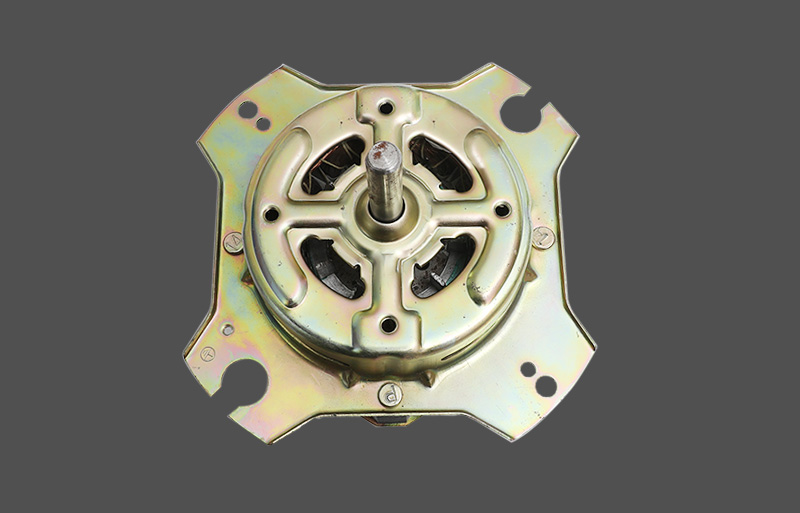
Den stående fläktmotor är kärnan i både hushålls- och kommersiella fans. Under drift kan det uppstå överhettning, vilket kan påverka motorns livslängd och driftsäkerhet. En väldesignad termisk skyddsmekanism är avgörande för stabil prestanda och hållbarhet. Den här artikeln ger en professionell översikt över designprinciper, typer, mekanismer och tillämpningar av termiskt skydd i stående fläktmotorer.
Betydelsen av termiskt skydd
Motorlindningar kan överskrida säkra temperaturgränser under långvarig drift eller hög belastning, vilket leder till åldrande av isoleringen, lagerskador och till och med motorutbränning. Överhettning kan också utgöra brandfara eller elektriska säkerhetsrisker. Termiska skyddsmekanismer övervakar motortemperaturen i realtid och aktiverar skyddsåtgärder vid behov, vilket säkerställer tillförlitlig drift. I stående fläktar skyddar termiskt skydd inte bara motorn utan förbättrar också produktkvaliteten och användarupplevelsen.
Typer av termiska skyddsmekanismer
Denrmal protection in standing fan motors is generally categorized into mechanical and electronic types. Mechanical protection often uses bimetallic strips or thermal switches, which disconnect the circuit based on thermal expansion properties. Electronic protection employs temperature sensors or thermistors (NTC/PTC) to measure temperature, with control circuits determining whether to cut power or reduce load. Electronic protection offers faster response and higher accuracy, enabling multi-level temperature control and fault alarm functions. Mechanical protection is cost-effective and simple, commonly applied in low-power household fans.
Utlösande princip för termiskt skydd
Denrmal protection activation is based on temperature detection and threshold judgment. Mechanical switches use thermal expansion to open contacts and disconnect power. Electronic protection converts temperature readings into voltage or resistance signals, allowing control chips to determine whether the motor exceeds preset temperature thresholds. When excessive heat is detected, the system can immediately cut power, reduce speed, or implement intermittent operation. Designers must consider sensor placement, response time, and hysteresis to avoid false triggers and ensure reliable protection.
Nyckeldesignparametrar
Nyckelparametrar i termisk skyddsdesign inkluderar temperaturtrösklar, svarstid, återställningsmetoder och installationsplats. Tröskelvärden bestäms baserat på motorns märkeffekt, isoleringsklass och driftsmiljö, vanligtvis runt 120 ℃ för hushållsfläktmotorer. Svarstiden påverkar direkt skyddseffektiviteten; snabbare svar förhindrar motorskador. Återställningsmetoder inkluderar automatisk och manuell återställning. Automatisk återställning passar kontinuerlig drift, medan manuell återställning ökar säkerheten i högriskapplikationer. Sensorer bör placeras nära slingrande eller hotspot-områden för att korrekt reflektera kritiska temperaturer.
Koordinering med värmeavledning
Denrmal protection works best when combined with effective heat dissipation. Proper airflow design, installation of heat sinks, and blade arrangement reduce localized motor temperatures, improving protection accuracy. Good heat dissipation delays temperature rise, reducing frequent protective trips and extending motor lifespan. Thermal simulation can evaluate temperature distribution, ensuring the protection device functions at key hotspots.
Överväganden om tillförlitlighet och livslängd
Denrmal protection devices in standing fan motors must exhibit high reliability and long operational life. Mechanical switches should withstand multiple thermal cycles without failure, while electronic sensors require high precision and resistance to electrical interference. Selecting high-quality materials, optimizing contact structures, and implementing moisture and dust protection enhance reliability. A robust thermal protection system prevents motor burnout and accidents during long-term use, ensuring product safety.